Cognitive Distortions: What They Are and How to Reduce Them

And how can we try to reduce them?


“Nobody likes me.”

 “I just failed that exam. I am such a failure in life.”

“I can’t trust anyone; everyone is going to end up hurting me.”

Credit: Just Passing Time

Do these thoughts sound familiar to you?

They are all prime examples of cognitive distortions – thought patterns that can cause you to perceive yourself, others, and the world in inaccurate and negative ways!

Cognitive distortions are habitual errors in thinking and most of us experience them from time to time. Although we develop these cognitive distortions to help cope with adverse life events, these thoughts might not be rational nor healthy for us in the long-term, as they can increase the risk for anxiety, depression, and other relationship difficulties.

Understanding Cognitive Distortions: A Comprehensive Guide

The different types of cognitive distortions

There are at least 10 different types of cognitive distortions we experience. These include:

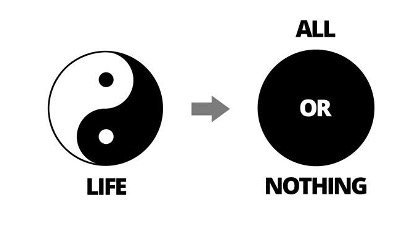
1. All-or-nothing thinking


“If I am not a total success, I am a failure.”

Also known as “polarised” or “black-and-white” thinking, all-or-nothing thinking occurs when we habitually think in extremes, viewing a situation in only two categories instead of on a continuum.

This kind of cognitive distortion is unrealistic and often unhelpful for us because most of the time, reality exists somewhere between the two extremes.

2. Catastrophizing

“I stuttered so much during the job interview, I must surely be rejected. I will never be able to get a job.”

Also called “fortune-telling”, catastrophizing involves assuming the worst when faced with uncertainties, predicting the future negatively without considering other, more likely outcomes. When we catastrophize, ordinary worries can quickly escalate.

While it is easy to dismiss catastrophizing as an over-reaction, people who have developed this cognitive distortion may have experienced repeated adverse life events, such as childhood trauma, so regularly that they have learnt to fear the worst in many situations as a coping strategy.

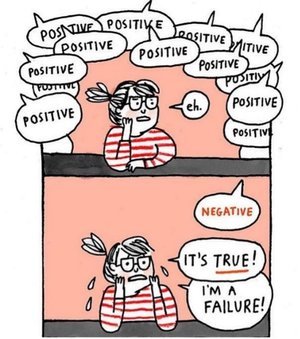
3. Disqualifying or discounting the positive

I might have scored well on that exam, but that does not mean I am competent; I just got lucky.”

A negative bias in thinking, you unreasonably tell yourself that your positive experiences, achievements, or qualities do not count, explaining them away as a fluke or abnormality. When we do this often and believe that we have no control over our circumstances, this thinking can diminish our motivation and cultivate a sense of “learned helplessness”.

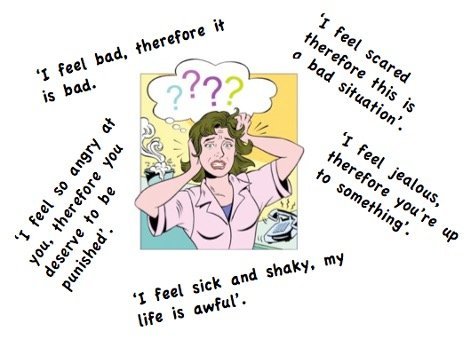
4. Emotional Reasoning

I feel like a failure, therefore I must be a failure, otherwise why would I feel this way?”

Emotional reasoning is the false belief that your emotions are the truth, and they are an accurate depiction of reality, whilst ignoring or dismissing evidence that suggests the contrary. Although it is important to listen to, validate and express your emotions, it is equally crucial to judge reality based on factual evidence! This is a common cognitive distortion even amongst people without anxiety or depression.

5. Labeling

“Since she arrived late, she must be a lazy and irresponsible person.”

You put a fixed, global label on yourself or others without considering that the evidence might more reasonably lead to a less negative conclusion. This often happens when you judge and then define yourself or others based on an isolated event. The labels assigned are usually negative and extreme.

Assigning labels to others can impact how you interact with them. This, in turn, could create friction in your relationships. When you assign those labels to yourself, it can also hurt your self-esteem and confidence, leading you to feel insecure and anxious.

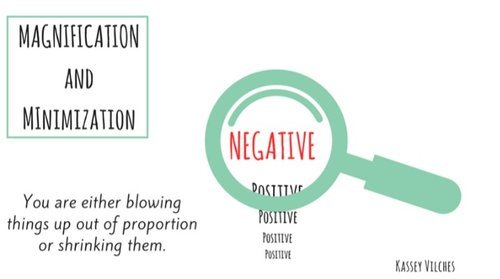
6. Magnification / Minimization

Getting a mediocre evaluation just proves how inadequate I am.” -- Magnification

“Getting high marks doesn’t mean I’m smart.” -- Minimization

Have you heard the popular phrase, “Don’t make a mountain out of a molehill?” Well, there is a reason why many often do that! When you evaluate yourself, another person, or a situation, you might unreasonably magnify the negative and/or minimize the positive.

7. Mental Filter

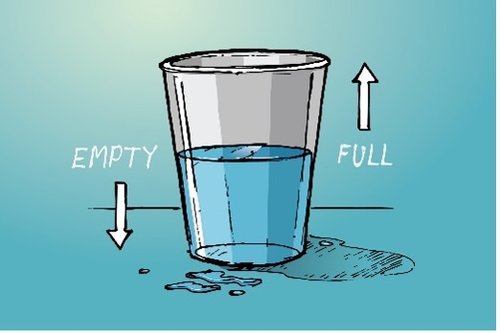
Is the glass of water half full or half empty?

Because I got one low rating on my evaluation [which also contained several high ratings], it means I’m not performing good enough.”

Mental filter is also known as selective abstraction when you dwell excessively on one negative detail instead of seeing the whole picture. Even if there are more positive aspects than negative in a situation or person, you focus on the negatives exclusively. Interpreting circumstances using a negative mental filter is not only inaccurate, but it can also worsen anxiety and depression symptoms. There is research that having a negative perspective of yourself and your future can cause feelings of hopelessness. These thoughts can become extreme enough to even trigger suicidal thoughts.

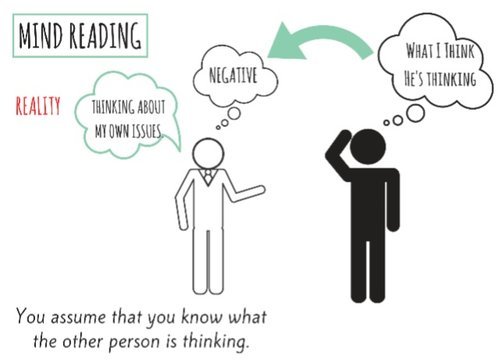
8. Mind Reading

“What a grim expression he has! I must have done something bad to offend him! This must be why he seemed so distant from me nowadays.”

Also known as “jumping to conclusions”, mind reading involves you believing that you know what others are thinking or feeling, while failing to consider other evidence or more likely possibilities. Then, you react to your assumption. This thinking error is often in response to a persistent thought or concern of yours.

9. Overgeneralization

“Because I felt so uncomfortable and awkward during the meeting, I don’t have what it takes to make friends. Oh no, I am destined to be alone!”

When we overgeneralize, we tend to make a negative conclusion about one event and then incorrectly apply that conclusion across other different situations in the future. Overgeneralisation is associated with Post-Traumatic Stress Disorder (PTSD) and other anxiety disorders.

10. Personalisation

“My parents are fighting again. It’s all my fault.”

One of the most common thinking errors is taking things personally when they are not connected to or caused by you at all. You might be engaging in personalisation when you blame yourself for negative circumstances that are not your fault or are beyond your control. Another instance is when you incorrectly believe you have been intentionally excluded or targeted, without considering more plausible explanations for others’ behaviours. This distortion is associated with heightened anxiety and depression.

11. “Should” and “Must” statements

It’s unacceptable that I was late – I should always be on time.”

These imperatives are subjective ironclad rules you set for yourself and others without considering the specifics of a circumstance. You have a precise, fixed idea of how you or others should or must behave with no exceptions, and you overestimate how bad it is that these expectations are not met. Yet when circumstances change, and things do not happen the way you want them to – they really depend on many factors – you feel extremely disappointed, angry, or upset.

12. Tunnel Vision

My life sucks. I have the worst life.

Just like being in a dark, isolated tunnel, you only see the negative aspects of a situation when you have tunnel vision.


How to reduce cognitive distortions: A guide


Remember that it’s often not the events but your thoughts that upset you in many instances. You might not be able to change the events, but you can work on redirecting your thoughts!

What do you see these thinking errors as having in common? Does it strike you that a common thread among these distorted automatic thoughts is the failure to take in all known information and to explore realistic outcomes based on evidence? 

The good news is that cognitive distortions can be corrected over time. Here are some steps you can take if you want to change thought patterns that may not be helpful.

Steps to Identify and Challenge Distorted Thoughts

Ψ Identify the distorted thought: the first step to change

  • When you notice your self-talk is causing you anxiety or worsening your mood, you can practise mindfulness and recognise what kind of cognitive distortion is taking place.

Ψ Conduct a reality check

  • Ask yourself if your thoughts are really accurate and check if there is any existing evidence that supports or contradicts it.

Ψ Reframing the situation

  • Look for alternative explanations, objective evidence, and shades of grey to broaden your interpretations.

  • It might also be helpful to create a thought record by writing down your original thought, followed by three or four alternative explanations based on the evidence available to challenge the cognitive distortions.

  • Example: Instead of thinking “I have a miserable life since all my plans are ruined”, try reframing your thoughts to “It’s okay; it’s just a bad day, not a bad life. Plans change and I can adapt.”

Ψ Putting things in perspective

  • Even if your negative thoughts about yourself, others or the situation are accurate, ask yourself if it will still be important in the grand scheme of things, and whether it will matter a week or month from now. Chances are, they most likely won’t.

Ψ Perform a cost-benefit analysis of your thoughts

  • Behaviours are often reinforced and repeated when they are perceived to be beneficial in some way.

  • If you find yourself often engaging in cognitive distortions, you might find it helpful to analyse how your thinking patterns have helped you cope in the past. Do they invoke a sense of control in situations where you feel helpless? Or do they allow you to avoid taking responsibility or necessary risks?

  • You can also identify the potential costs are of engaging in cognitive distortions. Weighing the pros and cons of your distorted thinking might motivate you to replace them with more balanced, positive thoughts.

Ψ The role of Cognitive Behavioural Therapy (CBT)

  • What is CBT? CBT is an evidence-based psychotherapy where people learn to identify, challenge and change unhealthy thinking patterns. If you need additional guidance in identifying and altering cognitive distortions, then you may find CBT helpful.

  • CBT usually focuses on specific goals. It generally takes place for a predetermined number of sessions and may take a few weeks to a few months to see results.

  • You may consider looking for a therapist who is properly certified and trained in CBT, and ideally has experience addressing your type of thinking pattern or issue.

In summary, cognitive distortions are negative thinking patterns that impact how you see yourself and others. When our thoughts are distorted, our emotions are, too. By becoming aware and redirecting these negative thoughts, you can significantly improve your mood and quality of life.

Reach out to a mental health professional if you need additional help!

Self-forgiveness

We are human, after all


The Importance of Self-Forgiveness for Mental Well-Being

Have you ever felt guilty about something you have done in the past? You may have offended someone or hurt their feelings, made bad decisions that harmed others, or did something you knew was wrong.

Oftentimes, when we feel guilty, we may end up engaging in self-defeating behaviors, such as believing we are not worthy of love or trust, lowered self esteem or in some cases even develop affective disorders. Ruminating on feelings of guilt, anger and shame can have negative consequences on one’s mental and physical health.

Understanding why guilt and shame affect us

Feelings of guilt, anger, and shame can be very intense, which causes the nervous system to be on high alert, pumping high levels of adrenaline into our body. Sustained surges of adrenaline over an extend period of time can lead to psychological disorders such as anxiety or depression. It may also manifest in physical symptoms, such as panic attacks, chest pains, headaches, muscle tension, stomach or digestive problems.

In order to manage these negative feelings, self-forgiveness is crucial to maintaining our psychological and physical well being. But first…

What is self-forgiveness?

Self-forgiveness a positive attitudinal shift in feelings, actions and beliefs about self, following a self-perceived wrongdoing committed by the self.

However, forgiveness is not a straightforward or easy task, so what are some steps we could take?


Steps to Manage Negative Feelings Through Self-Forgiveness

Ψ Accepting Responsibility: The First Step to Self-Forgiveness


The first step is accepting responsibility. If you find yourself making excuses, rationalising or justifying your behaviour in order to make them seem more acceptable, it may be time to accept responsibility. This may include taking responsibility for the hurt you may have caused others, or actions you may have taken that you regret.

Accepting responsibility is not the same as forgetting or moving on as if nothing happened, neither is it the same as punishing yourself for your bad decisions and wallowing in shame. Accepting responsibility is about accepting what happened and showing compassion to yourself. Self-compassion means treating your self-worth as unconditional, that is giving yourself the love, care and concern you need whenever you’re going through a tough time.

It is important to understand that we are not perfect, and to be tolerant of our shortcomings because we are all human.

Ψ Understanding Guilt


Guilt is important and normal.
Feeling bad about something bad we did is natural and can even helpful at times. For instance, guilt serves as motivation for us to do better next time. However, shame, which involves negative feelings about self such as feelings of worthlessness, is often associated with defensive strategies such as avoidance, denial or even physical violence. Shame may cause you to feel like you’re a bad person at the core, undermining your efforts to self-improvement or self-forgiveness. Shame-based thinking is a core belief that colors our world-view, and perpetuates self-defeating thoughts. One way we can break free from this negative pattern is by challenging your shame-based thoughts.

Some questions you can ask yourself are:

  • How do I know it’s true?

  • What proof do I have that supports this claim?

  • What experiences do I have that show that this belief is not completely true all the time?

  • Is this thought helpful or hurtful?

Guilt, on the other hand, may help us realise that our actions were bad, but that doesn’t make you a bad person. Therefore expressing remorse is an important step in making amends.


Ψ Restoring Trust: Actions to Move Past Guilt

One way to move past your guilt is by taking actions to restore the trust lost. This is not only important when it comes to forgiveness to others, but also to yourself. Making amends to the self is about taking concrete actions to right the wrong (whether it be to others or yourself). One way we could do that is by apologizing to the party we have hurt. For an apology to be sincere, it has to:

  1. Acknowledge the hurt caused

  2. Admit that your actions were wrong

  3. Explain why you regret it

  4. Describe what you would have done differently in the future so that it does not happen again


Navigating the Journey of Self-Forgiveness

It is important to be able to recognise when you should take responsibility, versus when things are beyond your control. We should be mindful to not over attribute blame on ourselves in situations we have no control of, especially in cases of abuse, trauma or loss. Lastly, if you find yourself struggling to forgive yourself, individual counseling may help.


Remember: Bad Actions Don’t Make You a Bad Person

it merely means that you made some bad choices.

Self-forgiveness does not have a one size fits all approach, and is different for everyone.

Self-forgiveness is not easy and we may slip up at times. And that’s okay, that’s normal. Try not to beat yourself up about it. Progress is not linear nor will everything go smoothly during the first try – so try again.  So have empathy for yourself, and work towards being a better person one step at a time!